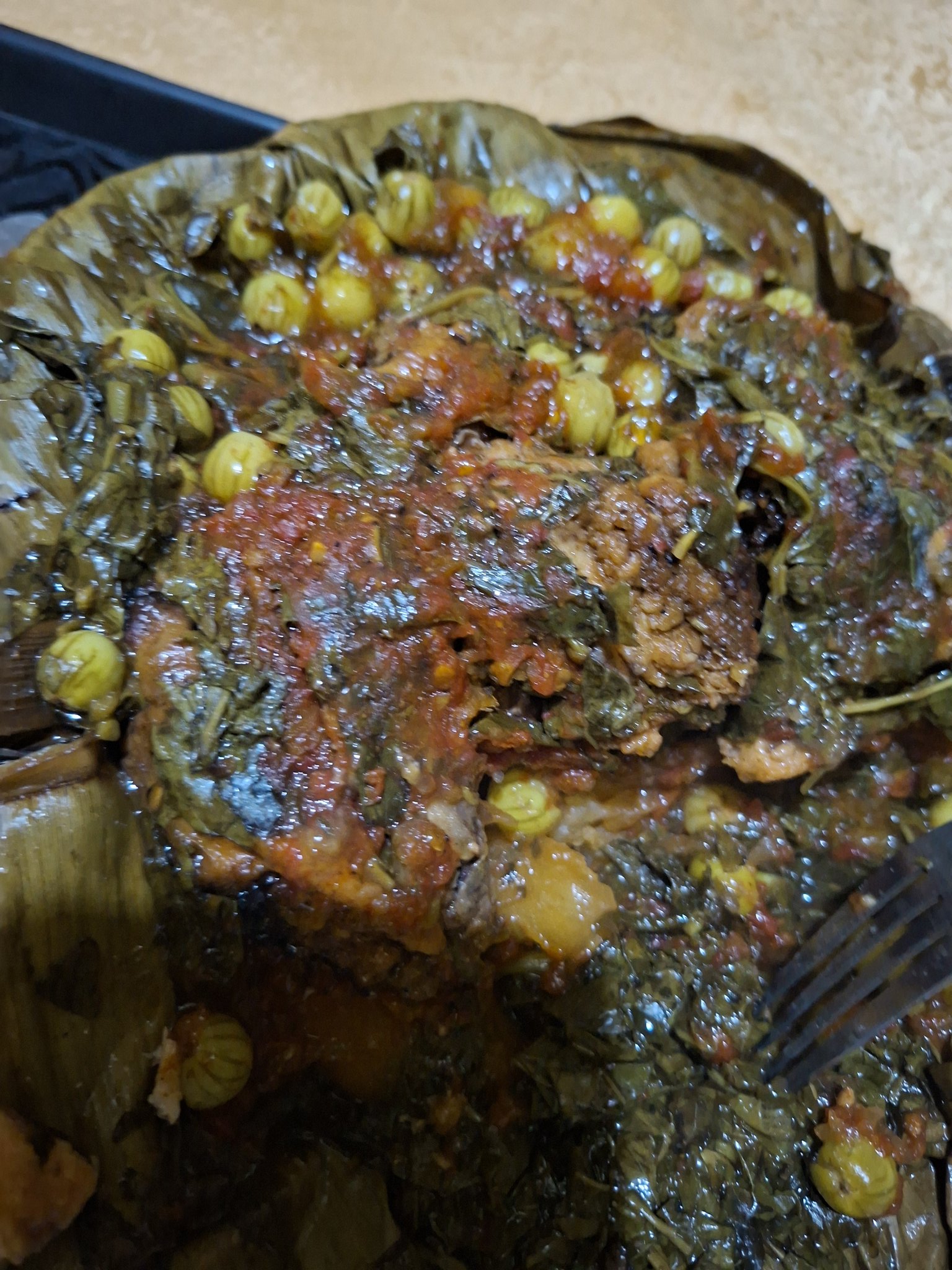


How to prepare Luwombo
Luwombo is a celebratory Buganda dish: meat, groundnuts, or mushrooms slow-steamed inside banana leaves, which infuse a delicate, earthy aroma. This guide shows both the traditional method and reliable modern-kitchen adaptations of Luwombo.
Below is a clean tutorial for making luwombo (Ugandan stew cooked in banana leaves). It balances tradition with modern kitchen substitutes and includes SEO-friendly headings just for you even if you have never prepared Luwombo. Practice is what creates perfection and that perfection could start here.
How to Make Luwombo (Ugandan Banana-Leaf Stew)
Luwombo is a celebratory Buganda dish: meat, groundnuts, or mushrooms slow-steamed inside banana leaves, which infuse a delicate, earthy aroma. This guide shows both the traditional method and reliable modern-kitchen adaptations.
What Is Luwombo?
Luwombo is a parcel of food typically chicken, beef, groundnut (peanut) sauce, smoked fish, or mushrooms seasoned and sealed inside softened banana leaves, then steamed gently until tender. The leaf wrapping keeps juices in, yielding deep flavor and a luxurious sauce.
Ingredients (Serves 4–6)
Choose one protein/sauce path below and keep the common aromatics.
Common aromatics and base:
2 medium onions, finely sliced
3 tomatoes, chopped (or 1 cup tomato passata)
3 cloves garlic, minced
1 thumb ginger, minced
1–2 green chilies (optional), slit
1 tsp curry powder or pilau masala (optional, regional)
1 tsp smoked paprika (optional, complements smoked meats)
1–2 Maggi/stock cubes or 1 cup light stock (optional)
Salt and black pepper to taste
2–3 tbsp vegetable oil or ghee
Pick one filling:
Chicken luwombo: 1 whole chicken cut into 8–10 pieces (skin-on, bone-in)
Beef luwombo: 1–1.2 kg beef, cubed (chuck or brisket)
Groundnut luwombo: 1.5 cups pure groundnut paste (unsweetened, unsalted) + 2–3 cups warm water
Smoked fish luwombo: 700–900 g smoked tilapia or Nile perch, rinsed and flaked into large pieces
Mushroom luwombo: 700–900 g oyster or local mushrooms, torn; add 1 cup coconut milk for body (optional)
Wrappings and steaming:
2–3 large fresh banana leaves (plus extra for lining) or previously sun-wilted leaves
Banana midribs/fibers or kitchen twine for tying
Banana stems/racks or a steaming trivet to keep parcels above water
2–3 cups water for steaming
Equipment
Large pot with tight-fitting lid (or traditional luwombo steamer)
Heatproof rack/trivet or banana stems
Large bowl and ladle
Frying pan or pot for the base sauce
Tongs and kitchen scissors
Step 1: Prepare the Banana Leaves
Wipe leaves clean. To make them pliable, pass each leaf briefly over a low flame or pour boiling water over it. You’ll see the color deepen and surface soften.
Trim ragged edges and cut into large rectangles (about 40×50 cm). Keep some smaller pieces to line the parcels and the pot.
Pro tip: Slight tears are fine; double-layer if needed to prevent leaks.
Step 2: Build the Flavor Base
Warm oil/ghee over medium heat. Sauté onions until translucent and lightly golden.
Add garlic, ginger, and chilies; cook 1 minute.
Stir in tomatoes (or passata), curry/pilau masala, paprika, and a pinch of salt and pepper. Simmer 5–8 minutes until saucy.
Taste and adjust seasoning. This base should be well-seasoned because steaming mutes salt a little.
For groundnut luwombo:
Loosen groundnut paste with warm water to a pourable cream. Stir into the base off heat to avoid catching. Season lightly; you can adjust salt later.
For meat luwombo:
Optionally sear chicken or beef pieces in batches for extra depth before returning to the sauce.
Step 3: Portion and Assemble Parcels
Lay two softened leaves crosswise to form a thick base. Add a small inner leaf sheet as a liner.
Spoon some sauce on the center. Add a portion of meat/fish/mushrooms. Top with more sauce to nearly cover.
Fold the long sides in, then the short sides over to create a tight parcel. Tie securely with banana fiber or kitchen twine. Repeat to make 4–6 parcels.
Leak check: Tilt gently no liquid should escape. If it does, add a second leaf and retie.
Step 4: Set Up the Steamer
Line the pot bottom with banana stems or fit a steamer rack. Add 2–3 cups water leaves must sit above the water line.
Place a few spare leaves over the rack for aroma, then arrange parcels seam-side down. Cover the top with another leaf layer before the lid to trap steam.
Step 5: Steam Low and Slow
Bring to a gentle boil, then reduce to a steady simmer.
Chicken: 1.5–2 hours
Beef: 2–3 hours (until fork-tender)
Groundnut/mushroom/smoked fish: 1–1.5 hours
Check water every 30–40 minutes; add hot water as needed without wetting the parcels.
Done when: Meat is tender and the parcel perfumes the air with a nutty-green aroma.
Step 6: Finish and Adjust
Using tongs, transfer parcels to a tray. Rest 5–10 minutes.
Snip ties and open carefully, keeping steam away from your face.
Taste sauce; adjust salt. If sauce is too thick, stir in a splash of hot water, stock, or coconut milk (for mushroom/groundnut). If thin, simmer opened parcel contents in a pan for a few minutes to reduce slightly.
How to Serve Luwombo
Present each parcel individually or decant into a serving bowl.
Traditional sides: matooke, steamed rice, posho, or sweet potatoes.
Garnishes: a drizzle of ghee, fresh coriander, or sliced chilies.
Serving note: Luwombo holds heat well in its leaves and this is great for communal meals and special occasions.
Tips, Variations, and Substitutions
No banana leaves? Use parchment to form a parcel, then wrap in foil to seal. Place a washed cabbage leaf on top for a hint of “green” aroma. Flavor won’t be identical, but texture will be close.
Richness control: A knob of ghee stirred in before serving adds sheen and roundness, especially for groundnut versions.
Smoke accent: For non-smoked meats, a small piece of smoked fish or a pinch of smoked paprika in the base echoes traditional notes.
Heat level: Keep chilies whole for gentle warmth; slice for more heat.
Make-ahead: Parcels can be assembled a few hours ahead and refrigerated. Steam 15–20 minutes longer from cold.
Food safety: Ensure beef/chicken reach safe doneness; avoid cross-contamination when handling raw proteins.
Troubleshooting
Parcels leaking: Double-wrap with an extra leaf; keep folds tight; tie at two points.
Sauce too oily: Spoon off surface oil before packing parcels, or blot with a paper towel after opening.
Meat not tender: Return to steamer 20–30 minutes more; maintain a steady simmer, not a hard boil.
Groundnut sauce curdling: Always loosen paste with warm water first and avoid rapid boiling; gentle heat prevents splitting.
Quick Recipe Card (Print-Friendly)
Soften banana leaves.
Make base: sauté onion, garlic, ginger; add tomatoes and spices; season.
Add chosen protein or groundnut cream.
Wrap tightly in banana leaves; tie.
Steam above water: 1–3 hours depending on filling.
Open, adjust seasoning, serve hot with matooke or rice.
This structure should drop smoothly into your site. If you want, I can adapt this into a CMS-ready format with schema.org Recipe metadata and a condensed “Jump to Recipe” section.
ByAdmin
Admin account author